
Advanced Procedures – Learn More
Dr Justin Yousef has a background in Plastic and Reconstructive Surgery training, which informs a careful and structured approach to procedural care, including wound planning, reconstruction, and post-procedural management.
-
Advanced procedural care refers to the assessment and management of conditions that may require technical expertise, reconstruction, or specialised wound care.
This includes:
Complex wound management
Skin cancer excisions requiring reconstruction
Local flaps and skin grafts when wounds cannot be safely stitched directly (refer to images)
Facial laceration repair
Nail bed injuries and procedures
Selected acute injuries and Worker’s Compensation cases
-
Some conditions require more than simple excision or basic closure.
In appropriate cases, this may involve:
Careful planning of wound closure to optimise healing and cosmetic outcome
Use of reconstructive techniques (e.g. flaps or grafts)
Layered closure and tension management
Consideration of function (e.g. eyelid, lip, hand)
👉The goal is to achieve:
Safe removal or repair
Good healing
Preservation of function
A considered cosmetic result
-
Each case is assessed individually. This includes:
Full history and examination
Discussion of options (including non-procedural or referral options)
Explanation of risks, benefits, and expected outcomes
Tailored procedural planning
Where appropriate, procedures can be performed in-clinic under local anaesthetic.
-
Selected workplace injuries can be assessed and managed, including:
Lacerations
Soft tissue injuries
Minor hand injuries
Documentation and reporting can be completed in line with Worker’s Compensation requirements
-
A key part of procedural care is recognising when a condition is best managed in a hospital or specialist setting. Where appropriate, referral pathways are discussed to ensure safe and optimal care.
Not all conditions require hospital treatment.
Many procedures can be safely performed in a clinic setting, which may allow for:
Earlier treatment
Continuity of care
Avoiding hospital wait times
However, referral is recommended when appropriate.
This may include:
Large or complex lesions
High-risk anatomical areas (e.g. eyelid, nose, ear)
Cases requiring more extensive reconstruction
Situations where multidisciplinary or hospital-based care is needed
If referral is required, this will be discussed with you.
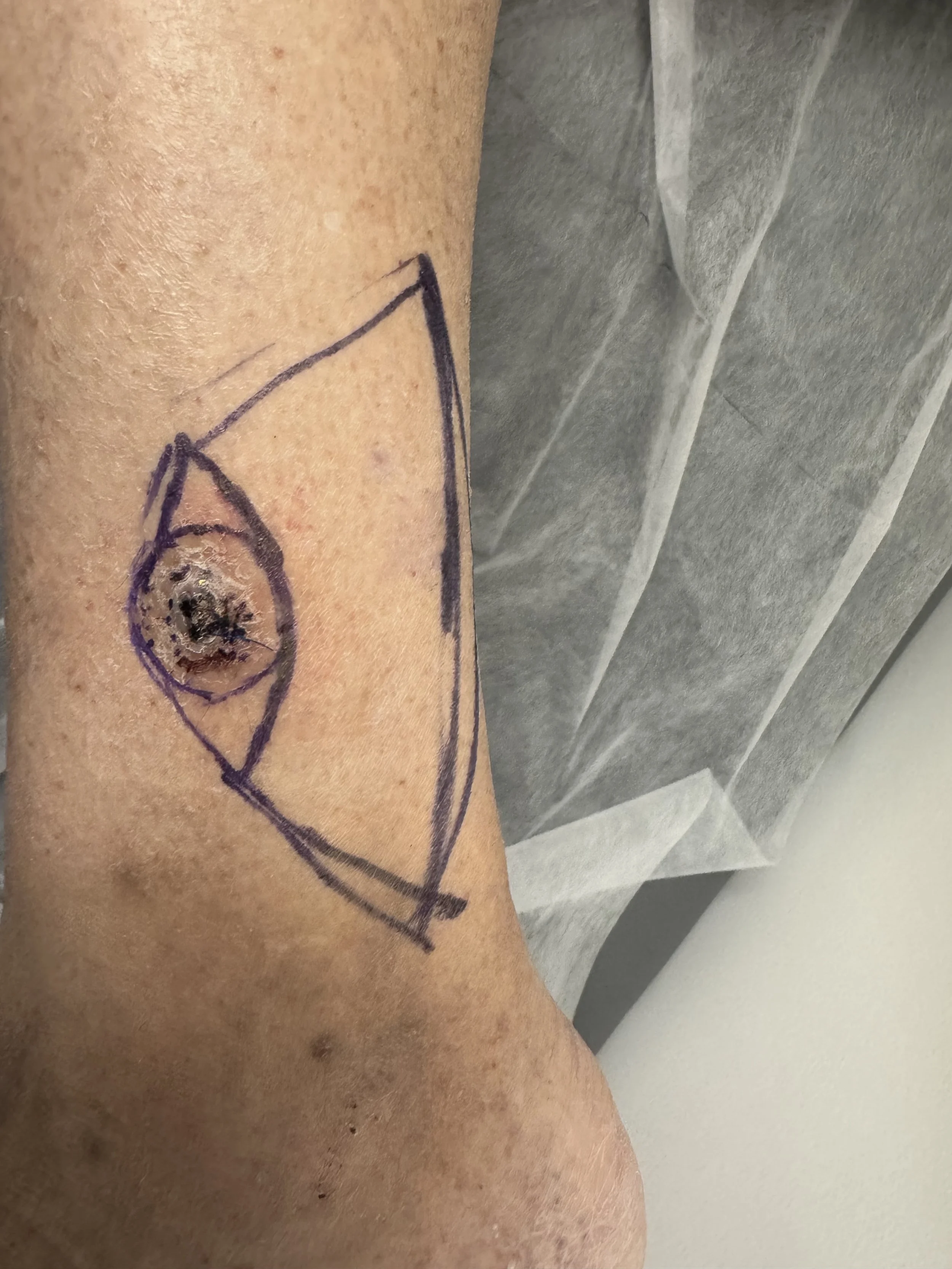
A skin cancer on a leg that, after excision, would not be possible to suture directly due to tension
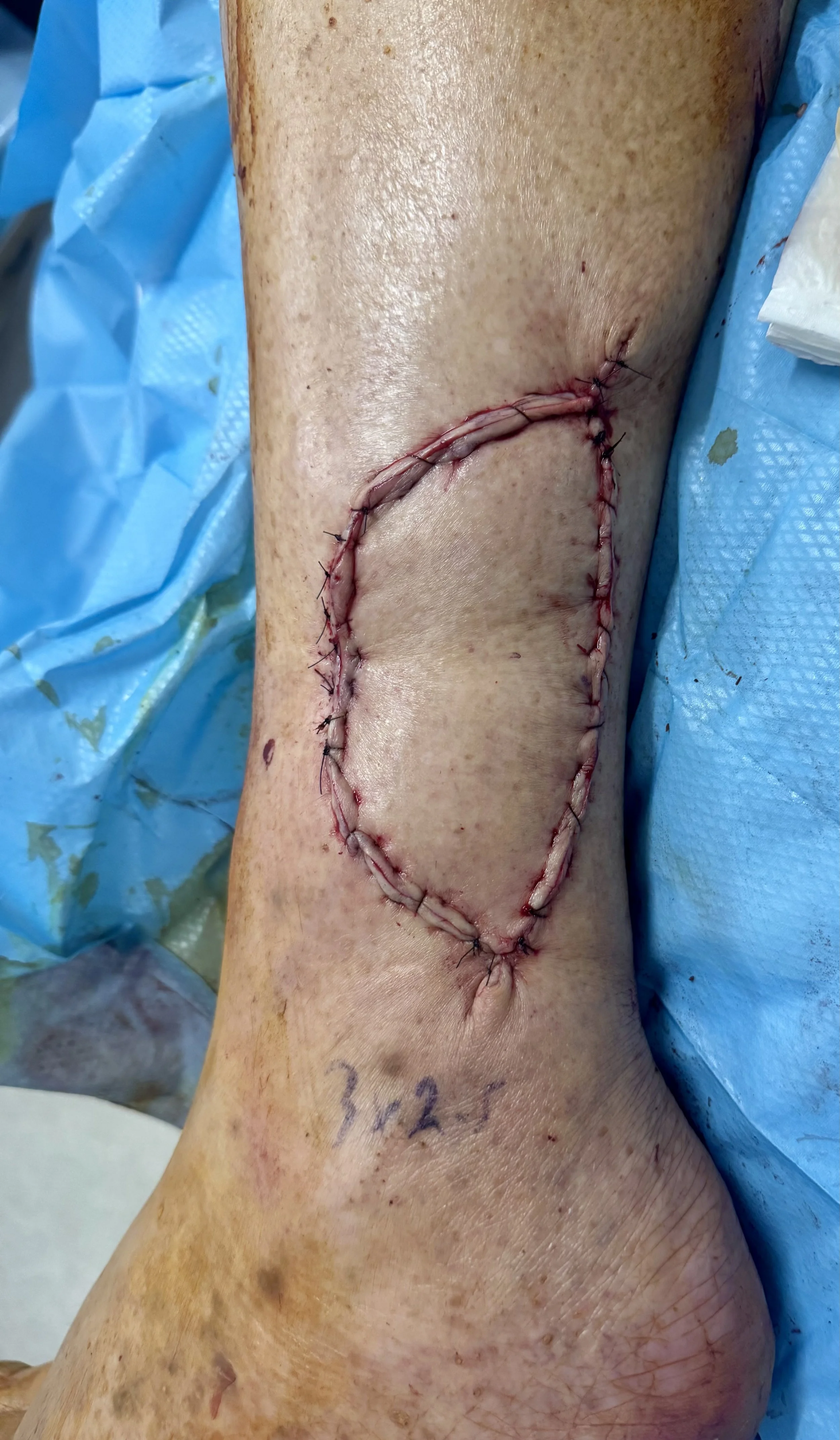
After excision, the defect was instead closed with a "flap" where adjacent skin and underlying tissue was mobilised to close the defect
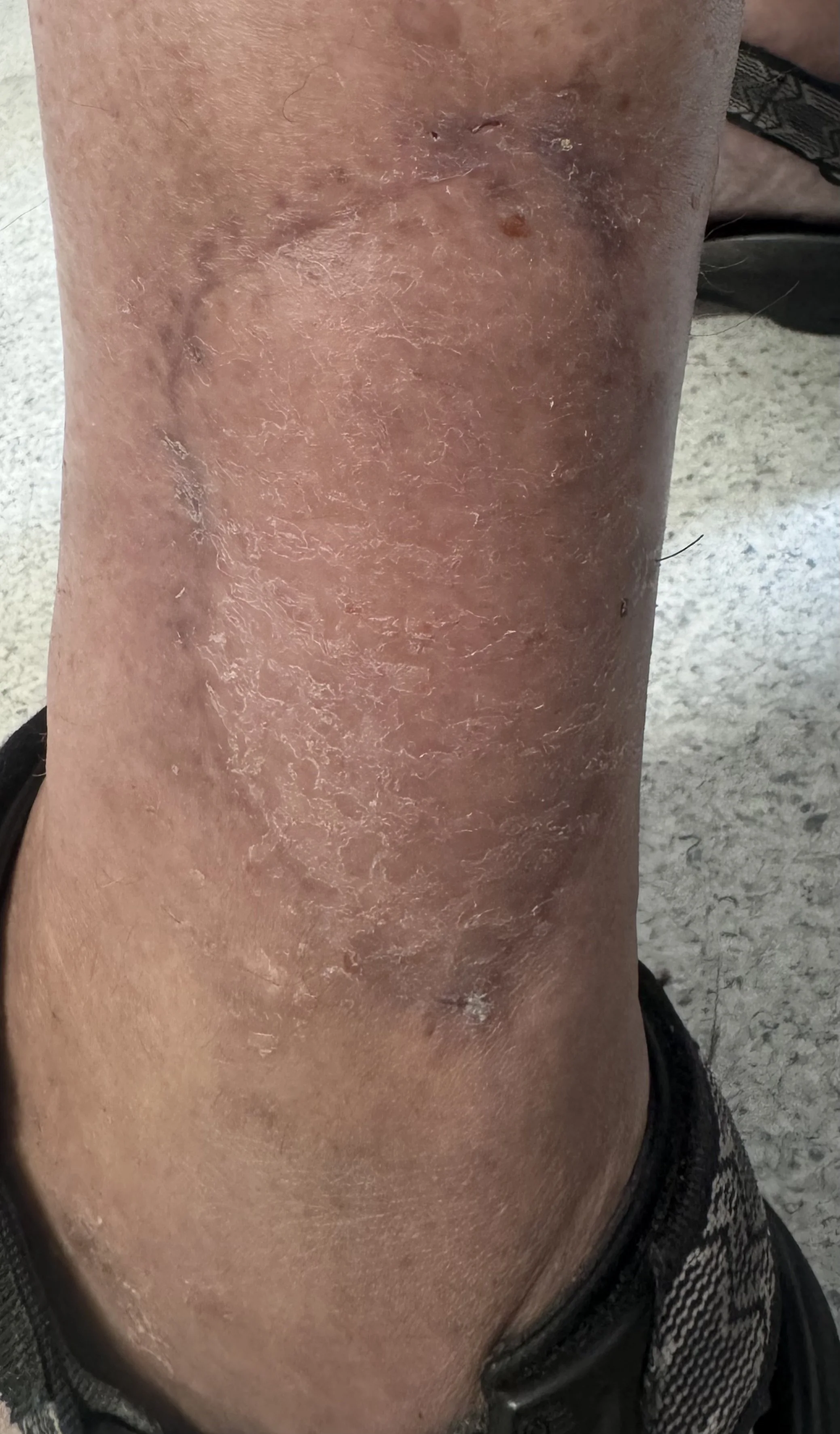
Appearance of the leg after 3 months